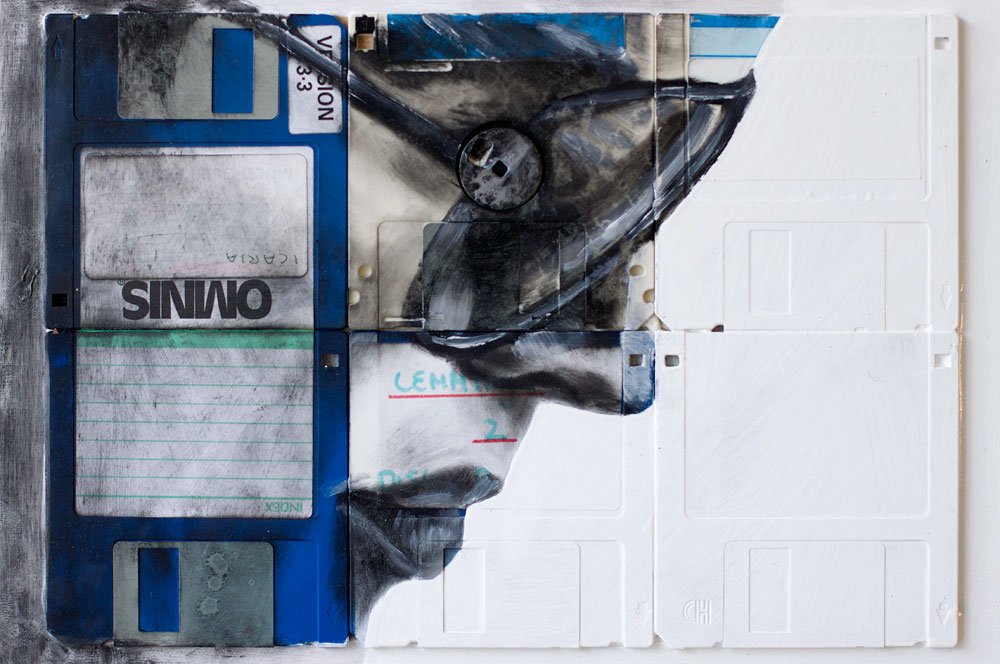
End of Decade, End of Tangible Media?

Over the past couple weeks, I have noticed many music sites posting what they believe to be the best albums of the year, as well as the decade. For some reason, this has got me thinking about the future as well as the past.

How will things look at the end of the next decade? Music, fashion, trends – all these things will undoubtedly be different. In addition, the way we consume media will be different as well.

I was listening to an NPR report in the car the other day, and they were discussing technologies that came out at the beginning of this decade. Some popular three letter abbreviations include Y2K, PDA, MP3, and AOL. Along with the turn of the century came Napster, the first truly popular peer to peer file sharing software. I think that this is where digital music files were realized as the definitive form of consumer music.

In many ways the end of this decade could mark the end of tangible media in general. To clarify, by tangible media I mean physical media – anything that is not digital. With services such as Netflix instant stream, actual DVDs are no longer necessary. The Kindle has brought reading to a new level, where heavy and bulky books are not part of the equation. Ever since Napster, music has been consumed in a much more digital realm. It is weird to think about, but I cannot even remember the last time I purchased a CD at a brick and mortar retailer.

So does this actually mean there will be no more CDs in ten years? Who knows. Perhaps CDs will experience a resurgence in popularity similar to the vinyl revolution that is currently happening. What I do know is that the only CDs I have actually purchased in the past few years have been from local or touring acts. The first thing that I do with these discs is rip them onto my hard drive and put them on my iPod.

Only time will tell how people consume music and other media products at the end of the next decade, but I am betting the trend of digital and intangible files will continue.

Original Artwork by Nick Gentry; http://www.nickgentry.co.uk/index.html

Home Recording Revolution

An examination of the industry as affected by affordable home recording equipment

A long long time ago when people only wore dress clothes and everything was black and white, you had to go to a big studio to record. I am talking about the 30s through the 90s. If you were at all interested in recording music, you had to find a place with all the necessary equipment. Analog gear was expensive, tricky to operate, and needed constant maintenance – not to mention required a lot of space!

Things look a little different in todays digital age. Although I do not know any exact statistics, I would venture to guess that a great majority of recordings made today are done at home. How can this be? Lets take a quick look at the home recording revolution.

Platform Shift: Music consumption has changed. In just the past decade, the preferred way of listening has gone from CDs to digital files – solid media to intangible megabytes. Big record companies were not ready for this, and responded by suing their customers for file sharing.

Advance of Digital Recording: Bulky analog gear was no longer necessary to record a good sounding album. Theoretically, a digital audio workstation (DAW) replaces the mixing board, effects processors, outboard gear, patch bay routing, tape machine, and many of the other aspects of an analog recording studio.

Smaller and Cheaper: Computers take up much less space than a giant mixing console or a 2 inch tape machine. As computers have gotten smaller and more powerful, they have also become less and less expensive. Along with this, other home recording equipment (microphones, cables, stands) necessary to make a basic recording are widely available and often inexpensive.

If you add all these elements together, the home recording take over makes perfect sense. Digital music files are easily created from digitally recorded sessions. Inexpensive home recording equipment and a relatively low learning curve have made the field much more accessible to newcomers. Today, it is fairly easy for singer songwriters and garage bands to make their own recordings – often with good sounding results. I have done a good amount of home recording, both for professional and personal purposes. Expect much more blog space to be dedicated to home recording tips, tricks, theories, and related topics in the near future! Home recording is not only fun, it seems more and more to be the future of recording – and definitely the most accessible form of music production.

The Impact of Recording on Listening

As technologies change and evolve, so does the human reaction to them. For example, when the first computers were built, they took up entire rooms. At the time, people thought the larger the computer the better. Today, our cell phones are much more powerful than these early computers, and smaller is preferred in most cases.

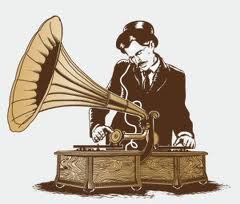
Early recording technology involved wax cylinders, and then shellac records. With the introduction of the gramophone/phonograph, people could gather around and listen to three minutes of an orchestra or jazz band recording. This was revolutionary at the time, and sometimes even perceived as magic. How could an entire band fit into such a little box?

As recording technology progressed, people became more familiar with the idea of captured sound and were no longer as surprised. After the discovery of magnetic tape, record sound quality increased dramatically, and LP records allowed listeners to enjoy an entire album of material. The communal listening experience was popular in the heyday of LP records; friends would simply sit and enjoy music together.

Similar to computers, the trend of music playback technology has been smaller and better. With cassettes and CDs, music became portable. It was easy to take a CD with you and play it in your car, or listen to it with a portable CD player. I remember how great I thought it was to have 35 CDs in a binder that I could take with me – how portable and convenient!

With the onset of digital recording, things have changed once again. Mp3 players are the preferred playback hardware, while their file counterpart have taken over the internet. The format has changed from heavy vinyl records to intangible 1s and 0s. Listening habits have taken a much more personal form, as opposed to the community listening approach that was popular back in the day. It seems everyone walking down the street has earbuds on. I find it interesting (and kind of sad) that people used to listen to albums all the way through together, and now many people I know have a hard time sitting through a single song.

Digital music has also led to what I guess could be called “subconscious listening”. In todays world, we are constantly being surrounded by music and other recorded sounds, even if we don’t realize it. Upon entering most restaurants and businesses, we are greeted by music. When calling a friend, many times they have “ringback” tones, which play a selected song while you wait for them to answer (this is especially true for customer support lines). Watching TV, listening to the radio, going to work, surfing the web, even walking down the street, you are always listening to music – even if you don’t want to be or aren’t aware it. And to think, someone had to record all of this music.

Why People Listen to Music

It is easy to take music for granted these days. There is so much of it, such a great variety, that it can be overwhelming. Never has it been this readily available to us, and we don’t even need to leave the house to access it. I know that when I am listening to music, I never really think of why I am doing it. This is just something that seems natural, very “human“.

Thinking back to the music classes I took in college, this feeling is reaffirmed. Here is what we were taught:

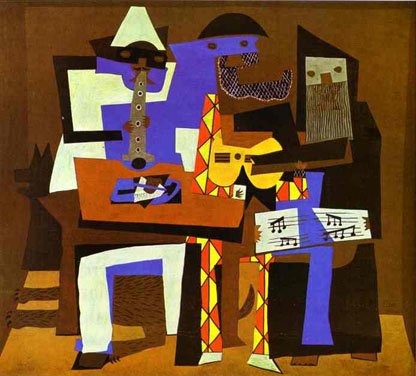
Music has been found in every known culture. Historically, this means that all people on earth, even the most distant and remote groups of settlers, have a form of music they call their own. If music has been there from the beginning of modern humanity, we could conclude that it has become a fundamental aspect of human life. Over the course of time and from region to region musical expression, instrumentation, and the situations in which music is performed have all changed. The music we choose to listen to identifies us as a part of a culture. We relate to the common ideas and themes, as well as social and economical classifications that go with it.

So according to this, listening to music is in fact a very “human” thing to do, considering we have been doing it for a long time. However, I believe modern humans do not listen for the same reasons ancient humans did. I think in todays environment, people choose their music based on a strong emotional and personal reaction. In my own experience, I am initially much more drawn to the primal elements of music: beat, rhythm, and harmony. The message any song is trying to communicate often takes a back seat.

The reason people listen to music is very personal. It has the power to express any type of emotion. It calms, it relaxes, it enrages, it excites, and it is natural (note: this is by no means a complete list of human emotions). Music’s long lasting relationship with the human race has clearly withstood the test of time.

How does this relate to music production? Perhaps not directly. I feel that if you understand why humans listen to music, you can understand why we record it. Or at least part of the reason why we record it. If someone is extremely passionate about the tracks they are laying down, then this emotion will be shared with the listener (maybe this passion is why an audience will choose to listen to this particular recording). Of course, there are many other reasons to record music. The process can be fun, there is a strong sense of accomplishment, and for many people there is the desire to make money or get famous. But aren’t these all just emotional reactions as well?

The Role of the Artist, Engineer, and Producer

Welcome!

This is my first blog post. Ever.

Over the next couple weeks I will undoubtedly get a feeling for how this works and the best way to go about it. Before we get into the more technical, creative, and experimental aspects of the recording process, it makes sense to start at the very beginning.

But where is the beginning? How can you start talking about such a diverse topic? History might be a logical start, and that will come in the near future.

I think it is important to clarify a few things here to start. As you can imagine, the recording process is diverse and varies greatly from session to session. Generally speaking, there are the same core group of people involved in the recording process. These are: the artist, the engineer, and the producer.

The role of the artist is pretty clear – they are the performers, the songwriters, the arrangers. They have crafted their songs to perfection, having scored all the music and written all the lyrics. Then the engineer is the one who captures this performance. They are armed with knowledge of operating all the sound equipment available to them, and they are skilled at pushing the record button at the exact right time. So this must mean the producer is the one who organizes all this madness, and oversees the entire process. Right?

Yes. Well, maybe. But actually, no. This is what I thought before I had any real experience in this field, as an outsider. Years of watching Mtv and Behind the Music specials had led me to this simple conclusion. It is not necessarily wrong, it is just over simplified and sort of ignorant.

Here is what I have learned about these positions over the past years:

Artist: there are many different types of artists. Singer songwriter, pop star, rock and roll band, multi-instrumentalists, non-instrumentalists, lyricist, people who can’t sing in tune, etc. The truth is, their role varies greatly depending on the genre and type of record they are working on. In today’s industry, it seems that it is more common for an artist to be the songwriter (this is especially true for indie bands). However, back in the heyday of rock n roll, many of the most famous stars did not compose their own music or words. It was often done for them by songwriters. Pat Boone was not (and still isn’t) a respected songwriter – he is a good at performing other peoples songs. Many famous pop stars today still use this approach. From Rihanna to the Jonas Brothers, they simply interpret and perform songs that have been specifically written for them by experienced song writers. Contrary to this, bands that perform in any of the rock subgenera usually compose their own material.

Engineer: “sound engineer”, “audio engineer”, “sound technician”, “the tone-master” – these terms are all fairly ambiguous and refer to someone working in music production. I like “sound technician” the best, as it summarizes the role quite well. Engineers work on the technical side of the recording process; they are skilled with the use of the machinery and equipment for the reproduction of sound. Responsibilities include placing of microphones, patching outboard gear, setting levels, and turning a lot of knobs. There are many different types of engineers in the professional audio world, and often these responsibilities are spread out among different people. Some of these include tracking engineer, mixing engineer, mastering engineer, audio post engineer (sound for film), live sound engineer, etc (these terms will be discussed in more detail in a future post).

Producer: for me, the role of a producer was the most difficult of the three to grasp. Basically, the producer is the one who ties everything together. Traditionally, they have overseen and managed the project. Again, this role varies from project to project, but often includes working with the artist to gather songs and ideas for a record, select musicians and songs, and most importantly, coaching the artist and accompanying musicians to obtain the best performance. In my experience, the producer many times will work closely with an engineer they trust to fulfill the certain sound ideas they have envisioned. An interesting note here is the contemporary producer, especially when working with hip hop artists. While the artist usually comes up with their own lyrics, the producer many times provides the beat for the performer to work with. Other duties may include financial negotiations, budgeting the project, and making sure things stay on schedule. Again, I think the most important aspect of being a producer is upholding the quality and integrity of a project.

As you can tell by these short descriptions, the definition of these different positions in the recording process is not always clear cut and can easily vary from project to project. For example, many electronic artists perform all three jobs at once, while hugely successful pop acts may have an executive producer, music producer, four engineers, and a whole series of studio musicians working with them. If nothing else, this shows that the recording process is open for personal interpretation and highly variable.